
After the last hard freeze
How to Tell If Your Sprinkler System Has Freeze Damage
You find sprinkler freeze damage at spring startup, not in winter, because a split line with no pressure behind it leaks nothing. Pressurize the system in its backflow model's specified sequence, then look for cracks or drips at the backflow preventer, water moving with no zone running, soggy ground over a buried line, and zones that will not build pressure.
Freeze damage hides. A split line with no pressure behind it leaks nothing and looks perfectly normal all winter, which is why the diagnosis happens at startup rather than in January. The upside is that the symptoms are specific: winter damage announces itself in a small number of recognizable ways, and most of them are visible in the first hour the system holds pressure — while a cracked fitting is still a cheap part rather than a midsummer emergency.
Working through it
- Step 1
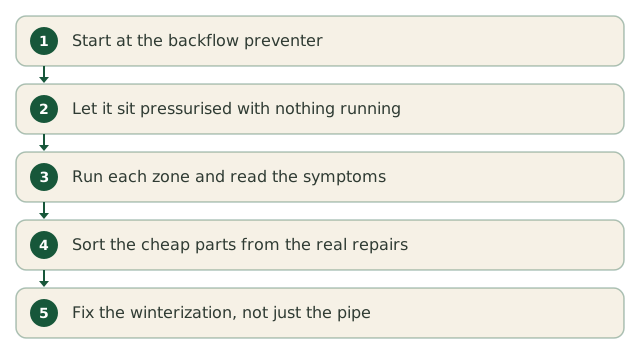
Start at the backflow preventer
Look for hairline cracks in the brass, a split along the body, a bulge, drips at the bonnet or the test cocks under pressure, or an RPZ relief valve that will not stop discharging. This is the most likely casualty on the whole system and the easiest to confirm — you can see it without digging.
- Step 2
Let it sit pressurised with nothing running
Fill the sprinkler system, then leave it alone and listen. Water moving with no zone on means a leak somewhere downstream. Come back an hour later and look for wet ground that has no business being wet — that is a split lateral finally showing itself.
- Step 3
Run each zone and read the symptoms
A zone that will not build pressure, heads that gurgle or only half pop up, a persistently soggy patch over a buried run, or one head throwing far less than its neighbors all point at a break between the valve and that head. A zone that does not come on at all is more often a cracked valve body or damaged solenoid wiring than a pipe.
- Step 4
Sort the cheap parts from the real repairs
Cracked heads and nozzles are inexpensive parts and a straightforward swap. Valve bodies are a step up but still routine. A split backflow assembly or a break under a driveway or patio is where a repair bill climbs toward the top of the $170–$2,500+ range — and where a plumber or irrigation contractor is usually the right call, particularly if your jurisdiction requires the backflow device to be re-tested after replacement.
- Step 5
Fix the winterization, not just the pipe
If something in the sprinkler system froze, the winterization method or the timing failed — a zone that never got cleared, a backflow device left sealed shut, or a blow-out done after the first hard freeze had already been and gone. Repairing the part without changing the routine buys you the same repair next April.
When does your last freeze usually fall?
The right sprinkler winterization method depends on your equipment, and the planning window depends on your location. Enter your ZIP for the NOAA freeze normals of the station we match to it — free, no signup required.
Free · no signup · NOAA 1991–2020 normals
Where this job usually trips people up
- How do I know if my sprinkler pipes froze over the winter?
- You generally find out about frozen sprinkler pipes at spring startup. Pressurise the system slowly and watch for cracks or drips at the backflow preventer, water moving with no zone running, soggy ground over a buried line, and zones that will not build pressure.
- Can a frozen sprinkler pipe fix itself when it thaws?
- A frozen sprinkler pipe does not fix itself when it thaws. Ice cracks the pipe wall or the fitting permanently; thawing just means the crack is now able to leak. It stays invisible only for as long as the system stays depressurised.
- How much does it cost to repair freeze damage?
- Repairing sprinkler freeze damage typically costs $170–$2,500+. A cracked head is a few dollars; a split backflow assembly or a break under hardscape is at the far end of that range.
- My backflow preventer is cracked — can I still run the system?
- Do not run a sprinkler system with a cracked backflow preventer. Beyond the leak, a damaged backflow device may no longer be protecting your drinking water from the irrigation line, which is what it exists to do. Leave the irrigation main closed and have it replaced.
Get the reminder without scrolling back up
Enter your ZIP and we’ll set up the same reminder the ZIP tool higher on this page offers, timed to when it actually matters for your area.
Free · no signup · NOAA 1991–2020 normals
Where this guidance comes from
The university extension and public-agency publications listed here back specific statements on this page. Each publication says which statement it backs, so you can check the statement rather than take it on trust. Where a product label or your local extension office disagrees with anything here, follow the label or the extension office.
- Home Sprinkler Systems: Preparing Your Sprinkler System for Winter (Fact Sheet 4.719)
Colorado State University Extension
Freezing water breaks pipes, fittings, valves and sprinklers, and that damage surfaces at spring start-up — why the page treats startup as the inspection.
- Home Sprinkler Systems: Backflow Prevention Devices
Colorado State University Extension
Backflow devices are damaged by freezing unless drained, and they exist to protect drinking water — why a cracked device means the irrigation main stays closed.
- Irrigation System Maintenance
Utah State University Extension
A sprinkler body cracked at its water connection lowers pressure and leaves dry spots, one of the zone symptoms the page lists.
- Properly preparing irrigation systems for winter
University of Minnesota Turfgrass Science
Freeze damage concentrates around the exposed backflow piping and can also hit valves, pipes, spray bodies and nozzles — the order the page inspects in.
