
Every lawn
Dethatching a Lawn: When It Helps, and When It Does Real Damage
Measure before you dethatch: cut out a wedge of turf and check the thatch layer. Around half an inch is the point to assess it, not an automatic trigger; symptoms, grass type and site decide between core aeration and dethatching, and most lawns need aeration. If you do dethatch, time it so the lawn can recover, confirmed locally.
Thatch is the spongy layer of living and dead roots, stolons and crowns between the green grass and the soil. A thin layer is useful: it cushions traffic, moderates soil temperature and holds moisture. A layer over about half an inch warrants a closer look, especially if water runs off or roots sit in the thatch rather than in soil. Thickness alone does not decide treatment: grass type, site conditions and symptoms matter. Dethatching is a genuinely violent operation — a power rake tears turf out by design — so the first job is to measure the layer and find out whether you have the problem at all.
Measure first — most lawns need something gentler
- Step 1
Measure the layer before you do anything
Cut a wedge of turf a few inches deep with a spade and look at the profile from the side. The thatch is the brown, fibrous, spongy band between green growth and soil.
As a rough guide: under half an inch is generally useful and can be left alone. Around half an inch is a common point to consider management or removal in both cool- and warm-season lawns; some sources use about an inch for mechanical removal. Core aeration can help manage thatch, but it is not automatically the right tool for every half-to-one-inch layer. Treat those numbers as one input rather than a rule — a vigorous stoloniferous grass like St. Augustine or zoysia builds thatch faster and tolerates more of it than a bunch grass does, a sandy root zone behaves differently from a compacted clay, and what actually decides it is whether the lawn is showing the symptoms (water running off, roots sitting in the thatch rather than the soil, footprints staying, scalping on small undulations). A thick layer with no symptoms on a grass that naturally runs thatchy is not the same problem as a thin layer on a lawn that is failing.
- Step 2
For most lawns, core aeration is the right answer instead
Core aeration pulls plugs through the thatch layer, opens it to air and to the soil microbes that decompose it, and leaves the turf intact. It treats the cause rather than the symptom, and it is what most lawns diagnosed with a thatch problem actually need. Dethatching is the tool for a layer that has already got beyond what aeration can work through.
- Step 3
Find out what built the layer, or it comes straight back
Thatch accumulates when it is produced faster than soil life can break it down. The usual causes are over-fertilising with nitrogen, compacted or low-pH soil where microbial activity is suppressed, and vigorously spreading species — bermuda, zoysia, St. Augustine and creeping bentgrass build thatch that bunch-type fescues largely do not. Removing the layer without changing the cause buys two or three years.
- Step 4
Choose timing that allows recovery
A power rake removes a serious amount of living turf along with the thatch, so the timing should allow recovery. Early fall is generally preferred for cool-season lawns. Spring can suit some regions, but disturbance can encourage weeds and leaves less recovery time before summer stress; coordinate weed prevention and seeding with labels.
Late spring to early summer after green-up is a usual choice for warm-season lawns: wait for full green-up and active growth. Local recommendations vary by species and method: Oklahoma Extension offers pre-green-up guidance, while St. Augustine and centipede guidance favors active growth and recovery time. Do not generalize the Oklahoma exception nationally. Use the windows above as planning guides, then check local guidance and the lawn’s condition.
Avoid dethatching under heat or drought stress. Do not treat a regional pre-green-up recommendation as permission for aggressive work on any dormant lawn; confirm the species, method and recovery conditions with local Extension guidance.
- Step 5
Test the machine setting before treating the lawn
Follow the equipment instructions and local guidance for your grass species when choosing blade depth and spacing. Start on a small test area with a light setting, then inspect the remaining thatch and any turf thinning.
For St. Augustine, guidance uses about 3-inch blade spacing; for centipede, 2–3 inches and about ¼-inch depth. Work in one direction on these two grasses; do not make a perpendicular second pass. A second direction can be appropriate for other lawns, but inspect the first pass and follow species and equipment guidance before repeating. Do not use the volume of debris alone as a reason to keep going or cut deeper.
- Step 6
Pair seeding with suitable establishment conditions
Removing debris can expose soil for seed contact. Seed only if the grass can be established from seed and local soil warmth, moisture and the remaining growing season support it. Pre-green-up dethatching is not itself permission to seed or fertilize dormant grass. Base feeding on grass needs, soil-test guidance and local restrictions. If seeding is appropriate, rake off debris and keep the seedbed moist, not saturated.
The advice worth questioning
- The belief
- “Leaving grass clippings on the lawn builds up thatch, so they should be bagged.”
- What’s actually happening
- Clippings are mostly water and break down within weeks, returning some of their nutrients to the soil. Thatch is made of tougher stuff — roots, stems, runners and crowns that decompose slowly and build up between the soil and the green blades. Over-feeding, compacted or acidic soil and vigorously spreading grasses are among its usual causes.
- What it leads to
- Bagging every mowing adds work, sends nutrients to the curb that the lawn then needs back from fertilizer, and leaves the real causes of thatch untouched, so it keeps building while the bags pile up.
- What to understand instead
- Leave clippings where they fall when you mow regularly and they settle into the grass rather than lying in clumps. If thatch is building, look at its causes — how much you feed, compaction, soil pH and your grass type — and measure its depth before deciding to dethatch. Bagging still makes sense for an overgrown cut that would smother the grass, when the lawn is diseased, or when the clippings carry weed seed heads.
If you do dethatch: only while the grass can recover
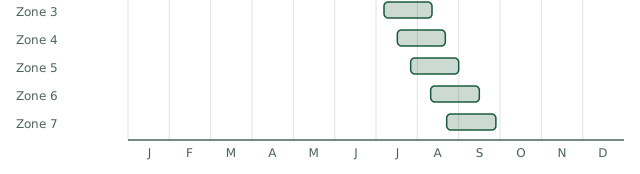
The windows below are timed off frost dates rather than the calendar — the same job happens more than a month apart across the country.
Cool-season lawns — estimated recovery window; confirm locally
Early fall is generally preferred. Spring can also suit cool-season turf, but disturbance can encourage weeds and leaves less recovery time before summer stress. Coordinate weed prevention and any seeding with product labels and local guidance.
| USDA zone | Window |
|---|---|
| Zone 3 | July 7 – August 11 |
| Zone 4 | July 17 – August 21 |
| Zone 5 | July 27 – August 31 |
| Zone 6 | August 11 – September 15 |
| Zone 7 | August 23 – September 27 |
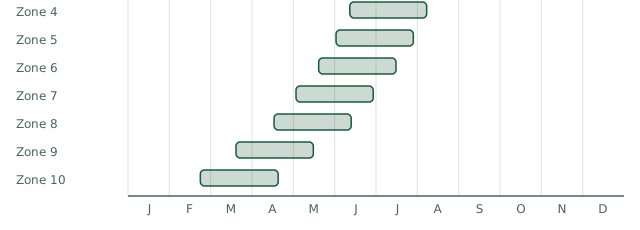
Warm-season lawns — estimated recovery window; confirm locally
Plan for full green-up and active growth with recovery time. Oklahoma Extension offers pre-green-up guidance, not a national rule; St. Augustine and centipede recommendations favor active growth with recovery time. Follow local species and method guidance.
| USDA zone | Window |
|---|---|
| Zone 4 | June 12 – August 7 |
| Zone 5 | June 2 – July 28 |
| Zone 6 | May 20 – July 15 |
| Zone 7 | May 3 – June 28 |
| Zone 8 | April 17 – June 12 |
| Zone 9 | March 20 – May 15 |
| Zone 10 | February 22 – April 19 |
The windows in each table above are zone-level approximations from long-term freeze normals. A hardiness zone measures winter cold rather than frost dates, so check your own local dates — and where the job is driven by soil temperature, let that have the final say.
Check both freeze dates where you live
The table above is a zone average. Enter your ZIP for the NOAA freeze normals of the station we match to it — first fall freeze and last spring freeze both — free, no signup required.
Free · no signup · NOAA 1991–2020 normals
Rather have the next seasonal job come to you?
We'll email you about three weeks before this ZIP's normal first freeze — while irrigation contractors still have slots, and before the backflow preventer is the part that freezes.
The blow-out reminder counts back from your metro's NOAA 1991–2020 median first freeze, not this year's forecast — a normal year, give or take a couple of weeks. Add your address and the reminder follows the live forecast for your own yard, with the checklist built around the zones and shut-offs you've mapped.
Dethatching and seeding in the same window?
Dethatching can help prepare a seedbed when removal is needed, but seeding also depends on the species, soil condition, moisture and remaining growing season. Many pre-emergents can injure new grass—skip seeded areas unless the exact label permits that use. Enter your ZIP in the free pre-emergent check to see where the crabgrass window falls near you, so the two do not collide — no signup required.
Check my pre-emergent windowClippings, aeration and seeding afterwards
- How do I know if my lawn needs dethatching?
- To check whether a lawn needs dethatching, cut a wedge of turf with a spade and measure the brown spongy layer between the green growth and the soil. Roughly half an inch is a useful point to assess the layer, not an automatic removal trigger. Recommendations commonly consider management or removal around this thickness for both cool- and warm-season grasses; some use about an inch for mechanical removal. Core aeration can help manage thatch. Choose using grass type, site conditions and symptoms such as runoff or roots growing in the thatch, together with local Extension guidance.
- Is dethatching or aeration better?
- For most lawns, aeration is a better choice than dethatching — it opens the thatch to the microbes that decompose it and relieves the compaction that let it build, without tearing out living turf. Dethatching is the heavier tool for a layer that is already past what aeration can reach. If you are choosing between them without having measured, choose aeration.
- When should I dethatch my lawn?
- Dethatching timing should allow for recovery: early fall is generally preferred for cool-season lawns. Spring can suit some regions, but can encourage weeds and leaves less recovery time before summer stress. Coordinate weed prevention and any seeding with product labels. Warm-season lawns should ordinarily be fully green and actively growing. Oklahoma offers pre-green-up guidance, while St. Augustine and centipede guidance favors active growth and recovery time. Follow local guidance for your grass and method rather than treating either window as universal. Avoid heat or drought stress; the freeze-based zone dates are planning guides.
- Do grass clippings cause thatch?
- The belief that grass clippings cause thatch is the most persistent myth in lawn care. Clippings are mostly water and break down within weeks. Thatch is roots, stolons and crowns, which are lignified and slow to decompose. Over-fertilising, compacted soil and vigorously spreading grasses can contribute to thatch, as can poor mowing practices. Ordinary clipping return is not a reason to bag; mow at the right height and frequency.
- Can I dethatch and overseed at the same time?
- Dethatching and overseeding can sometimes go together: debris removal exposes soil for seed contact, but the species must be suitable for seeding and local soil warmth, moisture and recovery time must support establishment. An early dethatching date does not establish seeding or feeding readiness. Fertilize only if appropriate to grass needs, soil-test guidance and local restrictions; keep a new seedbed moist, not saturated. Before adding a pre-emergent, check compatibility with seeding. Most conventional pre-emergents can injure seedlings or prevent establishment. Before seeding treated ground, follow the exact product's reseeding interval for the rate used; waits are often months, not weeks. Before treating newly seeded grass, follow its separate waiting, mowing and establishment requirements. Use a product at seeding only when its label allows your grass species, seed mixture, rate and timing. For crabgrass prevention while seeding cool-season grass, mesotrione products with new-seeding directions are an option only for the existing turf and seed mixture that product lists. Species and timing differ by product, especially for fine fescue; avoid over-application, particularly with perennial ryegrass.
Where this guidance comes from
The university extension and public-agency publications listed here back specific statements on this page. Each publication says which statement it backs, so you can check the statement rather than take it on trust. Where a product label or your local extension office disagrees with anything here, follow the label or the extension office.
- Managing Thatch in Lawns
Penn State Extension
For most lawns core aeration is the right answer to thatch: it relieves compaction and lets soil microbes break the thatch down, without tearing out living turf.
- What is Thatch?
UMass Amherst Center for Agriculture, Food, and the Environment
Leaving grass clippings on the lawn does not by itself build thatch, contrary to a widely held belief — so the fix is managing the layer, not bagging clippings.
- Managing Thatch in Home Lawns (G6708)
University of Missouri Extension
Dethatch only when the grass can recover quickly: early fall for cool-season lawns, and early summer for zoysia and bermuda once they are actively growing.
