
Timed off your first frost
Fall Lawn Care: The Rest of the Autumn Job List
Overseeding gets all the attention in autumn, but it is one job out of several — and a few of the others actively conflict with it. These guides cover the rest of the season: the fall feeding that cool-season programs are built around, the pre-emergent you may have to give up, the second seeding window if you missed the first, grubs, the last mow, and the leaves. Every window is anchored to your first frost rather than to a month, because the same job happens six weeks apart across the country.
Fall lawn care guides
Cool-season
Fall fertilizer
For many cool-season lawns, autumn is the best-placed time of year to feed.
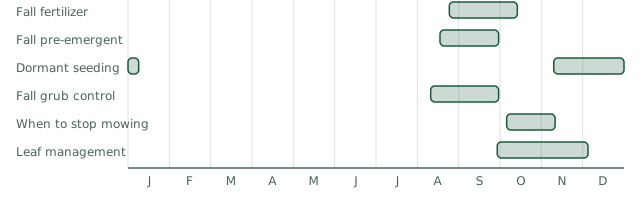
Zone 6: August 25 – October 13
Read the guide →Every lawn
Fall pre-emergent
The autumn twin of the spring application; check its fit with your overseed.
Zone 6: August 18 – September 29
Read the guide →Cool-season
Dormant seeding
Missed the overseeding window? There is a second, stranger one.
Zone 6: November 10 – January 8
Read the guide →Every lawn
Fall grub control
Inspect first, then match any treatment to the pest, product and local timing.
Zone 6: August 11 – September 29
Read the guide →Every lawn
When to stop mowing
The last cut of the year sets up how the lawn comes through winter.
Zone 6: October 6 – November 10
Read the guide →Every lawn
Leaf management
Mulching is usually better for the lawn — up to a point you can actually see.
Zone 6: September 29 – December 4
Read the guide →Where does your fall actually start?
Every window in these guides counts back from your first fall freeze. Enter your ZIP for the NOAA freeze normals of the station we match to it — free, no signup required.
Free · no signup · NOAA 1991–2020 normals
Seeding this fall? Read the order
Several fall lawn jobs can conflict. Many pre-emergents can injure new grass, so check the fall pre-emergent label before combining it with overseeding — whether that is a cool-season overseed or a warm-season winter overseed. Check its reseeding interval for treated ground and its separate new-turf requirements, including species, seed mixture, rate and stage, before you buy anything.
The other autumn deadline: the pipes
Every job in this fall lawn care guide is turf. The one autumn task that is plumbing rather than lawn care runs on the same clock and is far less forgiving about missing it — winterizing the sprinkler system has to be finished before the first hard freeze, not merely started near it. Not sure when yours arrives? Look up your first frost date by ZIP.
Where fall sits in the year
Autumn sets up next year's lawn: it is when many cool-season programs make their main feeding and seeding, and when warm-season grass winds down toward dormancy. For the full twelve months around it, the lawn care schedules by grass type put every one of these jobs on a single calendar tuned to your zone.
Where this guidance comes from
The university extension and public-agency publications listed here back specific statements on this page. Each publication says which statement it backs, so you can check the statement rather than take it on trust. Where a product label or your local extension office disagrees with anything here, follow the label or the extension office.
- Fall Lawn Care (430-520)
Virginia Cooperative Extension
Fall care sets up next spring for both cool- and warm-season lawns, and it is also when a pre-emergent and new seeding can conflict.
- Maintaining an Established Lawn
University of Maryland Extension
Autumn is the season to overseed and feed a cool-season lawn, while warm-season lawns are fed in late spring and summer instead.
- When can I stop mowing the lawn in the fall?
Iowa State University Extension and Outreach
The last mow of the year is set by when the grass stops growing, not by a calendar date.
