
Timed off your first frost
When to Overseed — by USDA Zone and State
The right week to overseed is set by your first fall freeze, not by the calendar: seed goes down about 6–8 weeks ahead of it, so a lawn in Minnesota seeds in August while one in North Carolina waits until September. Find your zone or state for the dates, then follow the grass-by-grass guide for rate, prep, and watering.
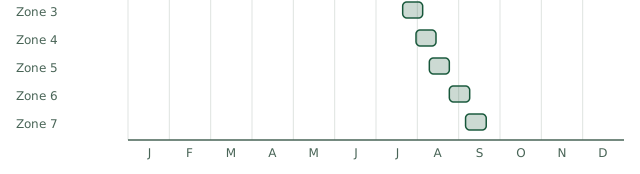
Pick your USDA hardiness zone
Zone 3
In Zone 3, seed July 21 – August 4 — first freeze normally around September 15.
Zone 3 dates →Zone 4
In Zone 4, seed July 31 – August 14 — first freeze normally around September 25.
Zone 4 dates →Zone 5
In Zone 5, seed August 10–24 — first freeze normally around October 5.
Zone 5 dates →Zone 6
In Zone 6, seed August 25 – September 8 — first freeze normally around October 20.
Zone 6 dates →Zone 7
In Zone 7, seed September 6–20 — first freeze normally around November 1.
Zone 7 dates →Count back from your own first freeze
Every window on this page is worked back from a first freeze covering a wide area. Enter your ZIP for the NOAA freeze normals of the station we match to it, and count your six weeks back from that — free, no signup required.
Free · no signup · NOAA 1991–2020 normals
Or start from your state
The state windows below are worked back from long-term NOAA freeze normals for the cool-season parts of each state, and anchored to the earliest-freezing station rather than averaged across them — a statewide window has to close before the coldest county's freeze, so it runs early for milder areas. Where a state's stations disagree by more than a week, its page names the later window too. States that are entirely warm-season turf aren't listed — overseeding a warm-season lawn for winter color is a different job on a different calendar.
- AlaskaAugust 6–20
- ColoradoAugust 13–27
- ConnecticutAugust 21 – September 4
- DelawareSeptember 6–20
- Washington, D.C.September 23 – October 7
- IdahoAugust 26 – September 9
- IllinoisAugust 25 – September 8
- IndianaAugust 31 – September 14
- IowaAugust 25 – September 8
- KansasSeptember 3–17
- KentuckySeptember 12–26
- MaineAugust 20 – September 3
- MarylandSeptember 5–19
- MassachusettsSeptember 14–28
- MichiganAugust 25 – September 8
- MinnesotaAugust 6–20
- MissouriAugust 29 – September 12
- MontanaAugust 12–26
- NebraskaAugust 26 – September 9
- NevadaAugust 28 – September 11
- New HampshireAugust 24 – September 7
- New JerseySeptember 15–29
- New MexicoSeptember 8–22
- New YorkAugust 20 – September 3
- North CarolinaSeptember 9–23
- North DakotaAugust 5–19
- OhioAugust 30 – September 13
- OklahomaSeptember 7–21
- PennsylvaniaAugust 28 – September 11
- Rhode IslandSeptember 4–18
- South DakotaAugust 11–25
- TennesseeSeptember 8–22
- UtahSeptember 5–19
- VermontAugust 20 – September 3
- VirginiaSeptember 9–23
- WashingtonAugust 17–31
- West VirginiaAugust 31 – September 14
- WisconsinAugust 15–29
- WyomingAugust 6–20
Want the frost date itself?
Every window on this page is worked back from a first fall freeze covering a wide area — an average across the zone, or the coldest station in the state. For the station we match to your ZIP — plus the last spring freeze and the sprinkler-winterizing deadline the same date sets — use the free first frost date lookup.
Then follow the grass, not the date
Getting the overseeding week right is half the job. The other half is the seeding rate, the mow-low and aerate prep, the keep-it-moist watering while it germinates, and the crabgrass pre-emergent you must not put down anywhere near it. Those are grass-specific — start with the step-by-step overseeding guides.
Want the date for your own ZIP?
We'll email you the week your overseeding window opens for this ZIP — while there's still time to get seed down and rooted.
The overseeding reminder window is your metro's long-term median, not this year's weather — the cool-season half counts back from NOAA's 1991–2020 first-freeze normals, the warm-season half from ten years of soil records — and a warm autumn or an early cold snap moves it by a couple of weeks. An account does not make this reminder follow your yard; what it does is keep the rest of the plan — the mowing, watering and weed-prevention reminders — timed to the yard you actually have.
Where this guidance comes from
The university extension and public-agency publications listed here back specific statements on this page. Each publication says which statement it backs, so you can check the statement rather than take it on trust. Where a product label or your local extension office disagrees with anything here, follow the label or the extension office.
- Establishing Turfgrass Areas From Seed (AY-3-W)
Purdue University Turf Science
The seeding window is regional and closes in fall, and seeding earlier within it beats seeding later — why each page gives a date range ending well before the first freeze.
- U.S. Climate Normals
NOAA National Centers for Environmental Information (NCEI)
The first-fall freeze dates these windows count back from are NOAA's long-term climate normals for weather stations, not a forecast for this year.
- How to Use the Maps — USDA Plant Hardiness Zone Map
USDA Agricultural Research Service
A USDA hardiness zone measures average winter cold, not frost dates, which is why the zone pages are labeled as a rough regional starting point.
