
Every lawn
Lawn Aeration: When to Aerate and Why It Works
Aerate cool-season lawns in early fall, roughly five to ten weeks before the first frost, and warm-season lawns from late spring into early summer once they are fully green. Pulling soil plugs lets air, water and fertilizer reach roots through compacted ground, so aerate for real compaction, heavy traffic or thick thatch — not out of habit.
Aeration pulls plugs of soil out of the lawn so air, water, and fertilizer can actually reach the roots instead of running off a compacted surface. Where compaction is real it is the highest-leverage thing you can do, because everything else — feeding, watering, seeding — works better through open soil than through a hard one. It is not an annual tax every lawn owes, though, and that is the part most advice gets wrong: aerate for measured compaction, heavy foot or pet traffic, a construction or new-build subsoil, or a thatch layer in the half-inch-to-an-inch range — not because a year has passed. Most home lawns on decent soil do not need it every season, and a lawn that takes a screwdriver easily in moist soil is telling you to spend the money elsewhere. When you do aerate, timing is not universal either: cool-season lawns aerate in early fall, warm-season lawns in late spring and early summer, each when its own grass is growing hard enough to heal the holes quickly.
Spring or fall? It depends on the grass
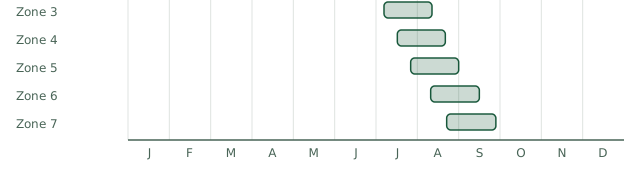
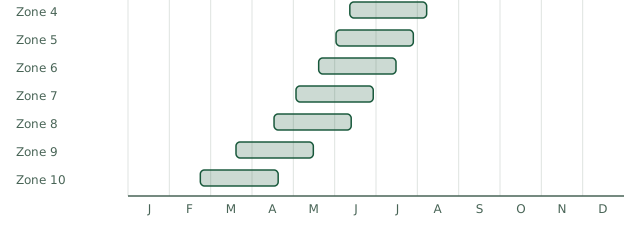
The windows below are timed off frost dates rather than the calendar — the same job happens more than a month apart across the country.
Cool-season lawns — aerate in early fall
Fall aeration pairs directly with overseeding — aerate first, then seed into the holes.
| USDA zone | Window |
|---|---|
| Zone 3 | July 7 – August 11 |
| Zone 4 | July 17 – August 21 |
| Zone 5 | July 27 – August 31 |
| Zone 6 | August 11 – September 15 |
| Zone 7 | August 23 – September 27 |
Warm-season lawns — aerate after full green-up
Wait until the lawn is fully green and growing hard, not just breaking dormancy.
| USDA zone | Window |
|---|---|
| Zone 4 | June 12 – August 7 |
| Zone 5 | June 2 – July 28 |
| Zone 6 | May 20 – July 15 |
| Zone 7 | May 3 – June 28 |
| Zone 8 | April 17 – June 12 |
| Zone 9 | March 20 – May 15 |
| Zone 10 | February 22 – April 19 |
The windows in each table above are zone-level approximations from long-term freeze normals. A hardiness zone measures winter cold rather than frost dates, so check your own local dates — and where the job is driven by soil temperature, let that have the final say.
Pin the window to your own frost dates
The table above is a zone average. Enter your ZIP for the NOAA freeze normals of the station we match to it — first fall freeze and last spring freeze both — free, no signup required.
Free · no signup · NOAA 1991–2020 normals
Rather be told when the season turns?
We'll email you about three weeks before this ZIP's normal first freeze — while irrigation contractors still have slots, and before the backflow preventer is the part that freezes.
The blow-out reminder counts back from your metro's NOAA 1991–2020 median first freeze, not this year's forecast — a normal year, give or take a couple of weeks. Add your address and the reminder follows the live forecast for your own yard, with the checklist built around the zones and shut-offs you've mapped.
Getting a core aeration right
- Step 1
Use a core aerator, not a spike aerator
Core aeration removes plugs of soil to help relieve compaction. Ordinary spike aerators — including strap-on shoes — push soil aside without removing it and can contribute to compaction. For this job, choose a core aerator that pulls plugs out and drops them on the lawn.
- Step 2
Aerate into moist soil, never bone-dry or soaked
Dry soil is too hard for the tines to reach depth, and saturated soil smears rather than pulls clean plugs. If the soil is dry, watering the day before can help; aim for soil that is damp a couple of inches down, not soaked.
- Step 3
Make more than one pass
A single pass leaves the holes too far apart to matter on a compacted lawn. Go over the worst areas twice, in crossing directions. Mark sprinkler heads, shallow irrigation lines, and any invisible-fence wire first — a core aerator will find them all.
Locate irrigation heads, buried lines, and utility markings before you start; call your local utility locate service if you are unsure what is under the lawn.
- Step 4
Leave the plugs where they fall
Aeration plugs look untidy for a week or two and then break down into the surface, returning soil and microbes to the thatch layer, which is part of the benefit. Raking the plugs up is extra work that removes the payoff. Mowing over dried plugs speeds the breakdown along.
- Step 5
Stack seeding and feeding onto the same weekend
Fresh aeration holes are the best seedbed a lawn will ever offer, which is why aerate-and-overseed is one job rather than two. The same applies to fertilizer and any soil amendment — they get into the root zone now instead of sitting on the surface.
Plan about 1 lb of nitrogen per 1,000 sq ft per feeding or less — a conservative default, not a universal limit. Local fertilizer rules can be stricter than this and can override it: several states and counties set a lower per-application limit, cap the soluble (quick-release) fraction separately, require a share of slow-release nitrogen, or ban applications outright during a seasonal blackout. Check your state or county rules before you spread. Always read and follow the product label — it is the legal authority on rates, timing, and safety. These windows are regional estimates, not a prescription; defer to the label and your local extension office.
- Step 6
Coordinate aeration and weed prevention
If both jobs are needed, core-aerate before applying pre-emergent where practical. Research generally finds that core aeration afterward does not reduce pre-emergent crabgrass control; it does not automatically waste the application. Check the exact product label and local guidance, especially if seeding: many products inhibit grass establishment.
Always read and follow the product label — it is the legal authority on rates, timing, and safety. These windows are regional estimates, not a prescription; defer to the label and your local extension office.
Aerating around a pre-emergent?
If both jobs are needed, core-aerate before applying pre-emergent where practical. Research generally finds that core aeration afterward does not reduce pre-emergent crabgrass control; it does not automatically waste the application. Check the exact product label and local guidance, especially if seeding: many products inhibit grass establishment. Enter your ZIP in the free pre-emergent check to see where the crabgrass window falls near you — no signup required.
Check my pre-emergent windowPlugs, frequency and timing: what people ask
- When should I aerate my lawn?
- The best time to aerate depends on your grass. Cool-season lawns aerate in early fall, roughly five to ten weeks before the first frost, which is also the overseeding window. Warm-season lawns aerate in late spring through early summer, once the lawn is fully green and growing hard. Both rules are the same rule: aerate when your grass is growing fastest, so it heals quickly.
- Should I aerate before or after overseeding?
- Aerate before overseeding — that is the whole point of pairing the two jobs. Aeration holes give seed the direct soil contact it needs, so aerate first and seed straight into the freshly opened lawn.
- How often should a lawn be aerated?
- Aerating once a year is plenty for most lawns, and heavy clay or high-traffic lawns benefit most. A sandy, low-traffic lawn that drains well may only need it every two or three years — aeration is a response to compaction, not a ritual.
- Is spring or fall better for aeration?
- For cool-season grass, fall is the better time to aerate — it aligns with the lawn's strongest growth period and with overseeding. Spring aeration is workable but it opens the soil surface right when crabgrass is germinating. If weed prevention is also needed, aerate first where practical and follow the product label, especially if overseeding. For warm-season grass, late spring into early summer is the correct window.
- Do I need to remove the soil plugs?
- Aeration plugs do not need removing: leave them, and they break down within a couple of weeks and return soil and microbes to the thatch layer, which is part of the benefit. Mowing over them once dry speeds it up.
Where this guidance comes from
The university extension and public-agency publications listed here back specific statements on this page. Each publication says which statement it backs, so you can check the statement rather than take it on trust. Where a product label or your local extension office disagrees with anything here, follow the label or the extension office.
- Aerating Lawns (HGIC 1200)
Clemson Cooperative Extension
Cool-season lawns are aerated in fall and warm-season lawns in late spring into summer, each while its own grass is actively growing and can recover.
- Maintaining an Established Lawn
University of Maryland Extension
Use a core aerator that pulls plugs rather than a solid-spike tool, which presses soil aside and can add to compaction; the plugs left on the lawn break down within a couple of weeks.
- Lawn Management through the Seasons
Penn State Extension
Spring aeration on a cool-season lawn opens the soil surface just as weeds such as crabgrass are germinating, which is one reason this page favors fall.
