
Lawn care schedules
Lawn care schedules by grass type & zone
Pick your grass type for a month-by-month plan — when to fertilize, water, mow, and apply pre-emergent — then narrow it to your USDA hardiness zone for region-tuned timing. Every schedule shapes nitrogen with grass-specific agronomic guardrails and points you back to your local fertilizer rules and the product label. These are research-based starting templates; inside YardLedger they adjust to your yard's specific needs — your soil, sun, goals, and the history of what you've logged.
Not sure where to start?
Enter your grass type and ZIP code in the free schedule generator for an instant, month-by-month plan tuned to your hardiness zone — no signup required.
Open the schedule generatorWarm-season grasses
Warm-season grasses thrive in summer heat and go dormant (brown) over winter. Common across the South and the lower transition zone.
Bermuda
The heat- and traffic-loving workhorse of Southern lawns.
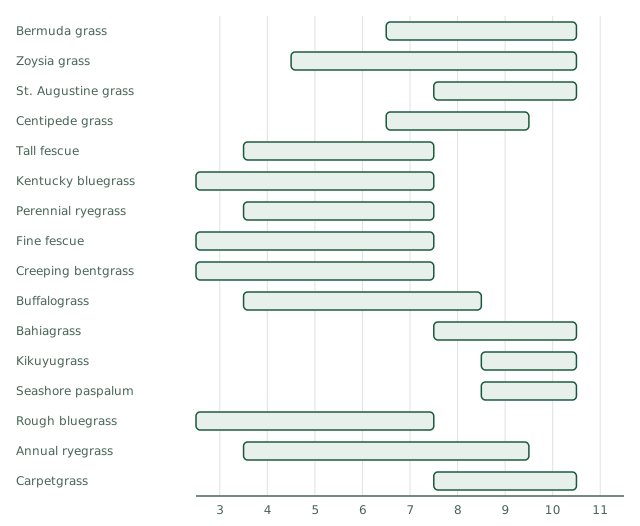
USDA zones 7–10
View schedule →Zoysia
A dense, slow-growing warm-season turf with good cold tolerance.
USDA zones 5–10
View schedule →St. Augustine
The shade-tolerant choice for the Deep South and coast.
USDA zones 8–10
View schedule →Centipede
The low-input "lazy-man's grass" for acidic Southern soils.
USDA zones 7–9
View schedule →Buffalograss
The native, low-input, drought-tough grass of the Great Plains.
USDA zones 4–8
View schedule →Bahiagrass
The tough, low-input grass for sandy Gulf Coast and Florida yards.
USDA zones 8–10
View schedule →Kikuyugrass
The fast, tough, aggressive grass of coastal California.
USDA zones 9–10
View schedule →Seashore Paspalum
The salt-loving fine turf for coastal and reclaimed-water sites.
USDA zones 9–10
View schedule →Carpetgrass
The low-input grass for wet, acidic, low-fertility Southern soils.
USDA zones 8–10
View schedule →Cool-season grasses
Cool-season grasses grow most in the cooler spring and fall and stay green through winter. Common across the North and the upper transition zone.
Tall Fescue
The deep-rooted, heat-tough cool-season grass for the transition zone.
USDA zones 4–7
View schedule →Kentucky Bluegrass
The classic self-repairing lawn of the cool North.
USDA zones 3–7
View schedule →Perennial Ryegrass
Fast-germinating, wear-tough, and a staple of cool-season blends.
USDA zones 4–7
View schedule →Fine Fescue
The low-input grass for shade, sandy soil, and minimal watering.
USDA zones 3–7
View schedule →Bentgrass
The reel-low, golf-green grass for cool-climate show lawns.
USDA zones 3–7
View schedule →Rough Bluegrass
The cool-season grass for damp, shady spots — used with care.
USDA zones 3–7
View schedule →Annual Ryegrass
Fast, cheap, temporary cover and Southern winter overseed.
USDA zones 4–9
View schedule →Why grass type and zone matter
Warm-season grasses like Bermuda and Zoysia peak in summer and go dormant in winter, while cool-season grasses like Tall Fescue and Kentucky Bluegrass do their most important work in fall. Your USDA hardiness zone narrows that to a region: it tells you which grasses survive your winter, and it points at the long-term freeze normals that shift the timing, so colder zones green up later in spring and shut down earlier in fall. A schedule that ignores either one will have you fertilizing or applying pre-emergent at the wrong time. The zone alone can’t finish the job either — two places in the same zone can differ by weeks on their first fall freeze — so treat these as a regional starting point and let soil temperature, the weather, and what your lawn is actually doing move the date.
Where this guidance comes from
YardLedger’s lawn care schedules follow published turfgrass guidance from university cooperative extension services, plus USDA’s own definition of the hardiness zones they key on. Each one below says which part of the guidance on this page it backs, so you can check it rather than take it on trust. Where a product label disagrees with anything here, the label wins.
- Carolina Lawns: A Guide to Maintaining Quality Turf in the Landscape (AG-69)
NC State Extension
Warm-season grasses go dormant over winter while cool-season grasses stay green, and the two need nitrogen at opposite ends of the year — the split this hub organizes every schedule around.
- Fertilizing Lawns (HGIC 1201)
Clemson Cooperative Extension
Annual nitrogen is budgeted per grass type rather than per lawn, and some species, such as centipede, carry a low yearly figure — the basis for the grass-specific planning ranges on every schedule here.
- Cool-Season Grasses: Lawn Maintenance Calendar (G6705)
University of Missouri Extension
Fall can carry most of a cool-season lawn's feeding — two or three fall applications may make a spring one unnecessary — and a published calendar is approximate for one region, which is why these are starting templates rather than dates.
- Crabgrass
University of Minnesota Extension
Pre-emergent timing is set by soil temperature rather than by the calendar — the reason this hub tells you to let soil temperature move the date.
- How to Use the Maps — USDA Plant Hardiness Zone Map
USDA Agricultural Research Service
A hardiness zone is an average annual extreme minimum WINTER temperature. It tells you which grasses survive your winter; it is not a growing-season map, which is why the zone narrows the timing here but never sets it.
