
Fall overseeding dates
When to Overseed in West Virginia
In West Virginia, the overseeding window is about August 31 – September 14, 6–8 weeks before the average first fall freeze around October 26, so seed germinates in warm soil and roots before the cold. Seed past it and seedlings run out of mild weeks to root before winter.
Overseeding is a timing problem before it is anything else. Seed needs soil that is still warm enough to germinate fast, plus enough cool, mild weeks afterwards to root before the ground goes cold — which is why the whole fall renovation is anchored 6–8 weeks ahead of the first freeze. In West Virginia the average first fall freeze lands around October 26, putting the seeding window at August 31 – September 14. The cool-season grasses worth overseeding here are tall fescue, kentucky bluegrass, perennial ryegrass, fine fescue, creeping bentgrass, and rough bluegrass.
- Seed between
- August 31 – September 14
- Average first freeze
- October 26
- Last worthwhile day
- September 14
The overseeding window on this state page rests on the long-term NOAA normals for the one station we track in the cool-season part of the state, so it describes a typical year rather than this one, and it does not speak for parts of the state that freeze earlier or later than that station. Elevation and cold-air drainage move the real date at your address by a week either way — check your local frost date before you buy seed.
The dates above come from the long-term NOAA freeze normals for Charleston.
Is this date your date?
The dates above are West Virginia's normals, anchored to its coldest station. Enter your ZIP for the NOAA station we match to it instead — not an average across West Virginia — and count your six weeks back from that. Free, no signup required.
Free · no signup · NOAA 1991–2020 normals
The window against the first freeze
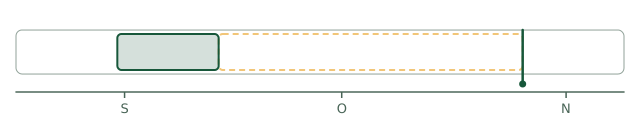
- Seed here — August 31 – September 14
- The six weeks the seedlings root in
- First freeze — October 26
Why August 31 – September 14, and not later
Warm soil
Seed germinates on soil temperature, not air temperature. Late summer soil is still warm from the season, which is what gets seedlings up fast.
Cooling air
Cooler nights, fading weed pressure, and a gentler sun make the weeks after germination far easier on new grass than a spring seeding ever gets.
Six weeks to root
Seedlings need roughly six mild weeks before the ground goes cold. Past September 14 they germinate and then have nothing left to root with.
West Virginia, ranked against the other deadlines
Of the 39 states we publish an overseeding deadline for, West Virginia closes 25th-earliest — 23 shut sooner, 14 stay open longer, and West Virginia lands 3 days behind the middle of it. Indiana closes on the very same day as West Virginia — a coincidence of climate, not shared data; each envelope is built from its own NOAA stations. The published deadlines either side of it are Indiana (September 14) and Kansas (September 17) — seeding advice written for either transfers to West Virginia almost unchanged, which is not true of a national "seed in September".
West Virginia's window comes from one tracked cool-season station, Charleston — first freeze October 26, so seeding closes around September 14. There is no in-state gradient to publish here, which cuts both ways: nothing on this page is averaged away, and nothing on it knows about the parts of West Virginia that freeze earlier than the Charleston grid. Where yours does, move the whole window back by the same number of days.
In numbers: West Virginia gets about 193 days between its median last spring freeze (April 16) and its first fall one (October 26), and the seeding window is 15 of them — roughly 8% of the growing season, once a year. The six weeks after September 14 are not spare time either; they are the rooting the seedlings do before the ground goes cold, which is why the deadline is a subtraction from the freeze date rather than a month on a calendar.
What to overseed with in West Virginia
Tall fescue
The deep-rooted, heat-tough cool-season grass for the transition zone.
Kentucky bluegrass
The classic self-repairing lawn of the cool North.
Perennial ryegrass
Fast-germinating, wear-tough, and a staple of cool-season blends.
Fine fescue
The low-input grass for shade, sandy soil, and minimal watering.
Creeping bentgrass
The reel-low, golf-green grass for cool-climate show lawns.
Rough bluegrass
The cool-season grass for damp, shady spots — used with care.
If you’re seeding in West Virginia
- When is the best time to overseed in West Virginia?
- The best time to overseed in West Virginia is roughly August 31 – September 14 — about 6–8 weeks before the average first fall freeze around October 26. The overseeding window on this state page rests on the long-term NOAA normals for the one station we track in the cool-season part of the state, so it describes a typical year rather than this one, and it does not speak for parts of the state that freeze earlier or later than that station. Elevation and cold-air drainage move the real date at your address by a week either way — check your local frost date before you buy seed.
- Is it too late to overseed in West Virginia?
- In West Virginia, an overseed sown past about September 14 no longer gives seedlings enough mild weeks to root before the ground goes cold, so a late overseed tends to germinate and then die over winter. If you have genuinely missed the window, you are usually better off waiting — or looking at dormant seeding once the soil is cold enough that the seed will not sprout until spring.
- Can I use a crabgrass pre-emergent this fall if I overseed?
- A crabgrass pre-emergent is generally not something to use on ground you overseed this fall. Most conventional pre-emergents can injure seedlings or prevent establishment. Before seeding treated ground, follow the exact product's reseeding interval for the rate used; waits are often months, not weeks. Before treating newly seeded grass, follow its separate waiting, mowing and establishment requirements. Use a product at seeding only when its label allows your grass species, seed mixture, rate and timing. For crabgrass prevention while seeding cool-season grass, mesotrione products with new-seeding directions are an option only for the existing turf and seed mixture that product lists. Species and timing differ by product, especially for fine fescue; avoid over-application, particularly with perennial ryegrass.
- What grass should I overseed with in West Virginia?
- Tall Fescue is the usual first choice in West Virginia — the deep-rooted, heat-tough cool-season grass for the transition zone. Match the seed to your conditions (sun versus shade) and follow the rate on the bag.
Want the date for your own ZIP?
We'll email you the week your overseeding window opens for this ZIP — while there's still time to get seed down and rooted.
The overseeding reminder window is your metro's long-term median, not this year's weather — the cool-season half counts back from NOAA's 1991–2020 first-freeze normals, the warm-season half from ten years of soil records — and a warm autumn or an early cold snap moves it by a couple of weeks. An account does not make this reminder follow your yard; what it does is keep the rest of the plan — the mowing, watering and weed-prevention reminders — timed to the yard you actually have.
