
Cool-season lawns
When to Apply Fall Fertilizer
Make a cool-season lawn's main fall feeding once summer heat has broken and the grass is growing strongly again — roughly one to eight weeks before your first frost. A lighter late-fall feeding while it is still green is optional; warm-season lawns stop nitrogen instead. Check whether your state or county sets a fall cutoff date first.
Fall is when a cool-season lawn recovers from summer. Cooler weather brings shoot growth back, and a well-timed feeding supports that new growth as well as the roots and reserves the grass carries into winter, which can help it green up earlier and thicker next spring. The main fall feeding goes down once summer heat has broken and the grass is growing well again. Some programs add a lighter feeding later in the fall, while the lawn is still green; that one is optional, and whether it helps depends on your grass, how much it has already been fed this year, and local rules.
The windows, by zone
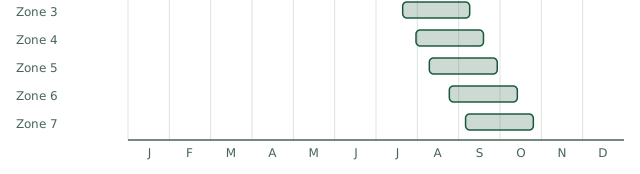
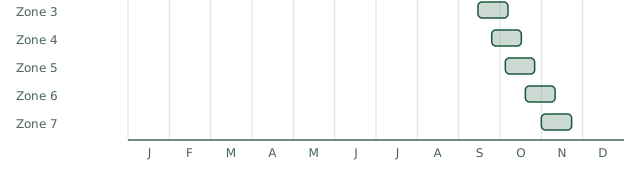
The windows below for fall fertilizer are approximate, counted from each zone’s typical first fall freeze rather than the calendar — the same week of work falls more than a month apart across the country.
Main fall feeding
Make the main fall feeding once summer heat has broken and the lawn is recovering.
| USDA zone | Main fall feeding | Average first freeze |
|---|---|---|
| Zone 3 | July 21 – September 8 | September 15 |
| Zone 4 | July 31 – September 18 | September 25 |
| Zone 5 | August 10 – September 28 | October 5 |
| Zone 6 | August 25 – October 13 | October 20 |
| Zone 7 | September 6 – October 25 | November 1 |
Late-fall (winterizer) feeding
A winterizer is optional — make it while the lawn is still green and before the ground freezes. Check for a local fall cutoff date first.
| USDA zone | Late-fall (winterizer) feeding | Average first freeze |
|---|---|---|
| Zone 3 | September 15 – October 6 | September 15 |
| Zone 4 | September 25 – October 16 | September 25 |
| Zone 5 | October 5–26 | October 5 |
| Zone 6 | October 20 – November 10 | October 20 |
| Zone 7 | November 1–22 | November 1 |
The dates in this table are zone-level approximations from long-term freeze normals. A hardiness zone measures winter cold rather than frost dates, so check your own local first-frost date — and where a job is driven by soil temperature, let that have the final say.
Look up the freeze these windows hang off
The table above is a zone average. Enter your ZIP for the NOAA freeze normals of the station we match to it — the date every window on this page hangs off — free, no signup required.
Free · no signup · NOAA 1991–2020 normals
Rather get one reminder when it’s time?
We'll email you about three weeks before this ZIP's normal first freeze — while irrigation contractors still have slots, and before the backflow preventer is the part that freezes.
The blow-out reminder counts back from your metro's NOAA 1991–2020 median first freeze, not this year's forecast — a normal year, give or take a couple of weeks. Add your address and the reminder follows the live forecast for your own yard, with the checklist built around the zones and shut-offs you've mapped.
The job, in order
- Step 1
Make the main fall feeding once summer heat breaks
The early-fall feeding is the one most cool-season fertilizer programs are built around. As summer heat breaks, cool-season grass recovers and puts nitrogen to work in both new shoots and the roots and reserves it carries into winter, which is why extension programs for cool-season lawns generally emphasize fall feeding over heavy spring feeding. Your local extension calendar gives the usual dates for your area.
Plan about 1 lb of nitrogen per 1,000 sq ft per feeding or less — a conservative default, not a universal limit. Local fertilizer rules can be stricter than this and can override it: several states and counties set a lower per-application limit, cap the soluble (quick-release) fraction separately, require a share of slow-release nitrogen, or ban applications outright during a seasonal blackout. Check your state or county rules before you spread. Always read and follow the product label — it is the legal authority on rates, timing, and safety. These windows are regional estimates, not a prescription; defer to the label and your local extension office.
- Step 2
Treat a late-fall feeding as optional
Some cool-season lawns get a lighter feeding late in the fall, after the main one, while the grass is still green and before the ground freezes. It is not required: whether it helps depends on your grass, how much the lawn has already been fed this year, and local rules — some states and counties set a fall cutoff date for lawn fertilizer. Your local extension calendar is the guide to timing where you are.
- Step 3
Ignore the "winterizer" blend marketing
Bagged products labeled "winterizer" are usually just higher in potassium, sold on the idea that potassium hardens a lawn for winter. Only add potassium if a soil test says yours is low — many soils already have plenty, and excess can aggravate salt problems rather than help. A plain nitrogen source at the right time beats a branded blend at the wrong one.
Let a soil test, not the bag, decide whether you need potassium.
- Step 4
Count these against the year's budget, not on top of it
Fall feedings come out of the lawn's annual nitrogen budget — for many cool-season programs they are the main applications of the year, not extra ones. A grass fed heavily all summer and then twice again in autumn has been over-fed, not well-fed.
Split the annual budget across the season. Plan about 1 lb of nitrogen per 1,000 sq ft per feeding or less — a conservative default, not a universal limit. Local fertilizer rules can be stricter than this and can override it: several states and counties set a lower per-application limit, cap the soluble (quick-release) fraction separately, require a share of slow-release nitrogen, or ban applications outright during a seasonal blackout. Check your state or county rules before you spread. Always read and follow the product label — it is the legal authority on rates, timing, and safety. These windows are regional estimates, not a prescription; defer to the label and your local extension office.
- Step 5
Never apply to frozen or snow-covered ground
Fertilizer on frozen ground cannot get into the soil — it sits on the surface and runs off into storm drains and waterways with the first melt. If you have missed the window, skip it and make the spring feeding count instead. Some municipalities restrict fall applications outright.
Check local fertilizer ordinances — several states and counties set fall cut-off dates. Always read and follow the product label — it is the legal authority on rates, timing, and safety. These windows are regional estimates, not a prescription; defer to the label and your local extension office.
What the old rule of thumb misses
- The belief
- “When the lawn looks tired in the summer heat, a round of fertilizer will perk it up.”
- What’s actually happening
- For cool-season grasses — fescue, bluegrass and ryegrass — midsummer heat is when they slow down to survive. Nitrogen pushes new leaf growth, and that growth draws on the energy the grass needs to keep its roots and crowns alive until the weather cools.
- What it leads to
- Feeding a heat-stressed cool-season lawn can leave it weaker going into late summer and more prone to disease, and fertilizer on dry, stressed turf risks burning it — the opposite of the boost it was meant to be.
- What to understand instead
- Let a cool-season lawn coast through the heat with deep watering and a high mowing height, and save the feeding for fall, when the roots are growing and can store what you apply. Warm-season grasses such as bermuda and zoysia work the other way round: summer is their growing season, and they are fed while actively growing. For rates and timing, follow the product label and your local fertilizer rules.
Before you start: the usual questions
- When should I apply fall fertilizer?
- The main fall feeding goes down once summer heat has broken and the lawn is growing strongly again — roughly one to eight weeks before your first frost. Some programs add a lighter, optional winterizer feeding later in the fall, while the lawn is still green and before the ground freezes — often within a few weeks after the first frost. Check whether your state or county sets a fall cutoff date for lawn fertilizer before planning one.
- What is the difference between fall fertilizer and winterizer?
- Fall fertilizer and winterizer differ mostly in timing. The main fall feeding is made once summer heat breaks and the lawn is recovering, and it is the one most programs are built around. A winterizer is an optional, lighter application later in the fall, while the lawn is still green and before the ground freezes. Products sold as "winterizer" typically carry extra potassium, which does nothing for you unless a soil test shows yours is low.
- Is fall really the best time to fertilize a lawn?
- Extension programs put the main feeding for most cool-season lawns in early fall, once summer heat breaks and the grass is growing again. Nitrogen at that point supports new shoots as well as roots and reserves, and fall-emphasized programs are favored over heavy spring feeding. Exact timing and amounts vary by region, grass and how the lawn has been fed, so your local extension calendar has the final say.
- Do warm-season lawns need fall fertilizer?
- Warm-season lawns do not need a late-fall feeding. YardLedger's warm-season schedules make the final feeding in late summer or early fall and stop nitrogen about six weeks before the average first frost — a conservative margin rather than a measured threshold. Extension timing varies: Virginia Cooperative Extension, for example, says the last nitrogen for bermudagrass or St. Augustinegrass should go down no later than a month before the expected frost. The late-fall winterizer feeding is a cool-season practice.
- Can I fertilize and overseed at the same time?
- Fertilizing and overseeding at the same time works, and the two pair well — a starter feeding at seeding fuels root growth on the new seedlings. A fertilizer containing pre-emergent herbicide needs a separate check: only use it at seeding if its label permits your species, mixture, rate and timing.
Where this guidance comes from
The university extension and public-agency publications listed here back specific statements on this page. Each publication says which statement it backs, so you can check the statement rather than take it on trust. Where a product label or your local extension office disagrees with anything here, follow the label or the extension office.
- Fall Lawn Care (430-520)
Virginia Cooperative Extension
Fall is the season cool-season lawns get the most from nitrogen, and fertilizer should not go down on frozen ground; for most heavy nitrogen users such as bermudagrass and St. Augustinegrass, the last nitrogen goes down no later than a month before the expected frost.
- Maintaining an Established Lawn
University of Maryland Extension
Cool-season lawns are best fed from late summer into autumn, and some states set a fall cutoff for lawn fertilizer — in Maryland, no nitrogen or phosphorus from November 15 to March 1.
- Fertilizing lawns
University of Minnesota Extension
Whether to add potassium is a soil-test question, not something to do because a bag is sold as a "winterizer".
