
Every lawn
Leaves on the Lawn: Mulch Them or Rake Them?
Mulch-mow fallen leaves back into the lawn while the layer is light — it returns organic matter and saves bagging. The test is visual: if you can still see grass through the chopped leaves after mowing, you are fine. Once the lawn disappears under a mat, rake or blow off the surplus before it smothers the grass.
Mulch-mowing leaves back into the lawn returns organic matter and nutrients, saves the bagging, and works well — right up until the volume is more than the turf can take. The useful rule is visual rather than numeric: if you can still see grass through the chopped leaves after mowing, you are fine. If the lawn has disappeared under a mat, the leaves have to come off, because a smothered lawn in autumn is a dead patch in spring.
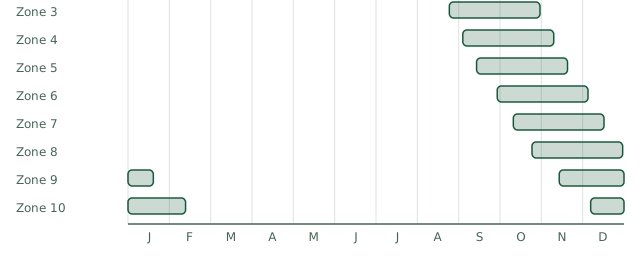
Leaf drop and clean-up, by zone
The windows below for leaf management are approximate, counted from each zone’s typical first fall freeze rather than the calendar — the same week of work falls more than a month apart across the country.
| USDA zone | Leaf drop and clean-up | Average first freeze |
|---|---|---|
| Zone 3 | August 25 – October 30 | September 15 |
| Zone 4 | September 4 – November 9 | September 25 |
| Zone 5 | September 14 – November 19 | October 5 |
| Zone 6 | September 29 – December 4 | October 20 |
| Zone 7 | October 11 – December 16 | November 1 |
| Zone 8 | October 25 – December 30 | November 15 |
| Zone 9 | November 14 – January 19 | December 5 |
| Zone 10 | December 7 – February 11 | December 28 |
The dates in this table are zone-level approximations from long-term freeze normals. A hardiness zone measures winter cold rather than frost dates, so check your own local first-frost date — and where a job is driven by soil temperature, let that have the final say.
Look up the freeze these windows hang off
The table above is a zone average. Enter your ZIP for the NOAA freeze normals of the station we match to it — the date every window on this page hangs off — free, no signup required.
Free · no signup · NOAA 1991–2020 normals
Rather get one reminder when it’s time?
We'll email you about three weeks before this ZIP's normal first freeze — while irrigation contractors still have slots, and before the backflow preventer is the part that freezes.
The blow-out reminder counts back from your metro's NOAA 1991–2020 median first freeze, not this year's forecast — a normal year, give or take a couple of weeks. Add your address and the reminder follows the live forecast for your own yard, with the checklist built around the zones and shut-offs you've mapped.
The job, in order
- Step 1
Mulch-mow while the layer is light
Run the mower over a light scatter of dry leaves — a mulching blade helps but is not required — and make a second pass at right angles if the pieces are still large. Chopped fine, they filter down to the soil and break down over winter, returning organic matter and a modest amount of nutrients.
- Step 2
Use the see-the-grass test to know when to stop
After mulching, look down. If grass blades are visible through the debris, the lawn can handle it. If you are looking at a continuous layer of leaf litter, you have exceeded what mulching can absorb and the rest needs removing.
- Step 3
Never let a wet mat sit through winter
Wet leaves pressed down over turf block light and air and hold moisture against the crowns — which is how you get matted, dead patches and snow mould come spring. Do not leave a heavy layer in place over winter, and clear leaves off before the first snow sits on top of them.
- Step 4
Put the surplus to work rather than to the curb
Leaves you remove are a resource: shredded, they are excellent mulch for beds and a prime carbon source for a compost pile. Shredding first is what makes them break down at a useful rate instead of forming their own mat.
Before you start: the usual questions
- Is it better to mulch leaves or rake them?
- Mulching leaves beats raking them, as long as the volume is manageable — it returns organic matter to the soil, saves the work of bagging, and does the lawn good. Rake or blow off whatever is beyond what mulching can absorb.
- How many leaves can I mulch into the lawn?
- Mulch only as many leaves as still let you see grass through the chopped pieces after mowing. The visual check is more reliable than any depth measurement, because leaf size and moisture change how much volume the lawn can take.
- What happens if I leave leaves on the lawn all winter?
- A heavy layer of leaves left all winter mats down, holds moisture against the crowns, and blocks light and air. You get dead patches and a good chance of snow mould where it sat. A light scatter is harmless; a blanket is not.
- Do mulched leaves cause thatch?
- Mulched leaves do not cause thatch. Thatch is built from tough, slow-decomposing stems and roots, not leaf litter — chopped leaves break down readily and add organic matter rather than accumulating.
Where this guidance comes from
The university extension and public-agency publications listed here back specific statements on this page. Each publication says which statement it backs, so you can check the statement rather than take it on trust. Where a product label or your local extension office disagrees with anything here, follow the label or the extension office.
- Using Leaves in the Landscape
Colorado State University Extension
Mulch-mow leaves while you can still see grass through the chopped pieces; mulched leaves add organic matter and do not build thatch.
- "Leave" Them Alone: Lawn Leaf Management (430-521)
Virginia Cooperative Extension
A thick layer of leaves left on the lawn blocks light and raises disease risk, while leaves chopped fine with a mower did no harm to turf in research.
- Leaf Disposal & Mulch Mowing
UConn Integrated Pest Management Program
Mulching works only while sunlight still reaches the grass through the chopped leaves; a layer too thick deprives the lawn of light.
