
Warm-season grass
Centipede Grass: Fungus & Disease
Worried about lawn fungus on your Centipede grass lawn? Brown patch, dollar spot, and the conditions that cause them. This guide takes the general diagnosis and tunes it for Centipede grass — the signs to look for, what to do first, and how a warm-season lawn recovers — kept safety-first, with the product label as the final word.
What this means for Centipede grass
Centipede grass: The low-input "lazy-man's grass" for acidic Southern soils. As a warm-season grass at its peak in summer, when it browns or thins the cause is usually a specific pest, disease, or drought — not the grass simply giving out. Disease like this flares in warm, humid weather once the canopy stays wet too long, so get watering timing right before considering a fungicide. Identifying the actual culprit is the whole game: fix that and a healthy stand normally bounces back. Worth knowing about Centipede grass generally: tolerates light shade.
How to tell on a Centipede grass lawn
- Roughly circular brown or tan patches that appear overnight, sometimes with a darker outer ring — though circular damage has other causes too.
- Worst in hot, humid weather, in low spots, or after evening watering keeps the canopy wet.
- Fine, web-like growth on the grass in the early morning dew with some diseases.
- Patches expand and merge over days rather than staying put like a spill or scalp.
What to do
- Step 1
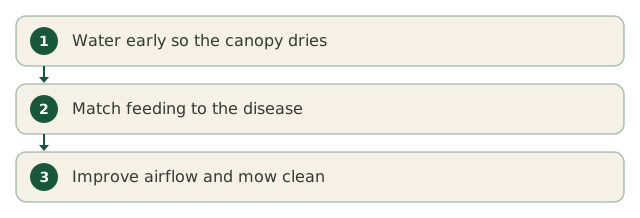
Water early so the canopy dries
Water in the early morning and avoid late-afternoon or evening watering that leaves the blades wet all night. Cutting unnecessary leaf-wetness is one of the most effective cultural fixes — though disease also depends on temperature, humidity, mowing, thatch, and the grass itself, so timing alone isn't a guarantee.
- Step 2
Match feeding to the disease
Nitrogen cuts both ways with lawn disease, so identify the disease before you change your feeding. Brown patch, large patch, and gray leaf spot are worse on lush, over-fed turf — ease off nitrogen until it recovers. But dollar spot, red thread, and rust are worse in underfed, slow-growing turf, where adequate nitrogen helps while the grass is growing (other nutrients as a soil test shows need). Don't blanket-cut nitrogen without knowing which one you have.
Always read and follow the product label — it is the legal authority on rates, timing, and safety. These windows are regional estimates, not a prescription; defer to the label and your local extension office.
- Step 3
Improve airflow and mow clean
Mow with a sharp blade (a ragged cut is an entry point), and improve airflow and drainage where you can. Identify the specific disease before considering a fungicide. Home lawns rarely need one; if a confirmed disease keeps coming back or is severe, ask local Extension whether a labeled one is warranted — some work best applied early.
Always read and follow the product label — it is the legal authority on rates, timing, and safety. These windows are regional estimates, not a prescription; defer to the label and your local extension office.
Not sure it's Fungus & Disease?
On Centipede grass, lawn fungus can look like several other problems. Answer a few quick questions in the free YardLedger diagnosis tool and the tool narrows what your Centipede grass lawn is actually showing — and the fix for each — no signup required.
Diagnose my lawnHow Centipede grass recovers
Centipede grass spreads and self-repairs, so once the cause is handled, small thinned or damaged areas usually fill back in on their own with steady watering and time — you rarely need to reseed. One thing working in Centipede grass's favor: very low fertilizer and mowing needs. Leaf damage often recovers once the wet canopy or wrong feeding behind it is corrected, but some diseases attack crowns and roots and can kill turf.
Safety first on Centipede grass
Over-fertilizing is a well-known cause of centipede decline. Stay within the low 1–2 lb annual nitrogen budget and plan each feeding at about 1 lb per 1,000 sq ft or less (a planning default); reach for iron, not nitrogen, for color.
Match any fungicide to the specific disease you've confirmed — feeding advice actually reverses between diseases, since easing nitrogen helps brown patch but can make dollar spot worse. And more generally, Centipede grass has this going for it: thrives in acidic, sandy, low-fertility soils. Always read and follow the product label — it is the legal authority on rates, timing, and safety. These windows are regional estimates, not a prescription; defer to the label and your local extension office.
Preventing it next season
Water deeply and early rather than in the late afternoon or evening; feed to match the disease (ease off nitrogen for brown and large patch, but keep it adequate for dollar spot while it's growing); and mow regularly with a sharp blade. Most lawn disease is managed by watering, feeding, and mowing habits, not by spraying.
