
Common in summer
Lawn Fungus: How to Spot It and What to Do
Lawn fungal diseases like brown patch and dollar spot flare in warm, humid weather, especially when the lawn stays wet for long stretches. Feeding matters too, but it cuts both ways: brown patch and large patch are pushed by excess nitrogen, while dollar spot is actually worse in underfed turf. The conditions that drive disease are largely ones you can change — often without ever reaching for a fungicide.
How to tell
- Roughly circular brown or tan patches that appear overnight, sometimes with a darker outer ring — though circular damage has other causes too.
- Worst in hot, humid weather, in low spots, or after evening watering keeps the canopy wet.
- Fine, web-like growth on the grass in the early morning dew with some diseases.
- Patches expand and merge over days rather than staying put like a spill or scalp.
What to do
- Step 1
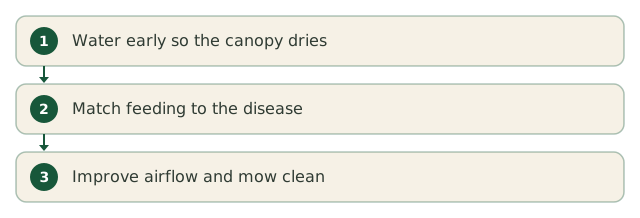
Water early so the canopy dries
Water in the early morning and avoid late-afternoon or evening watering that leaves the blades wet all night. Cutting unnecessary leaf-wetness is one of the most effective cultural fixes — though disease also depends on temperature, humidity, mowing, thatch, and the grass itself, so timing alone isn't a guarantee.
- Step 2
Match feeding to the disease
Nitrogen cuts both ways with lawn disease, so identify the disease before you change your feeding. Brown patch, large patch, and gray leaf spot are worse on lush, over-fed turf — ease off nitrogen until it recovers. But dollar spot, red thread, and rust are worse in underfed, slow-growing turf, where adequate nitrogen helps while the grass is growing (other nutrients as a soil test shows need). Don't blanket-cut nitrogen without knowing which one you have.
Always read and follow the product label — it is the legal authority on rates, timing, and safety. These windows are regional estimates, not a prescription; defer to the label and your local extension office.
- Step 3
Improve airflow and mow clean
Mow with a sharp blade (a ragged cut is an entry point), and improve airflow and drainage where you can. Identify the specific disease before considering a fungicide. Home lawns rarely need one; if a confirmed disease keeps coming back or is severe, ask local Extension whether a labeled one is warranted — some work best applied early.
Always read and follow the product label — it is the legal authority on rates, timing, and safety. These windows are regional estimates, not a prescription; defer to the label and your local extension office.
Not sure this is the one?
Several lawn problems look alike from the porch, lawn fungus among them. Answer a few quick questions in the free YardLedger diagnosis tool and the tool checks your symptoms against all of them — and what to do about each — no signup required.
Diagnose my lawnGet the next seasonal job sent to you
We'll email you about three weeks before this ZIP's normal first freeze — while irrigation contractors still have slots, and before the backflow preventer is the part that freezes.
The blow-out reminder counts back from your metro's NOAA 1991–2020 median first freeze, not this year's forecast — a normal year, give or take a couple of weeks. Add your address and the reminder follows the live forecast for your own yard, with the checklist built around the zones and shut-offs you've mapped.
Preventing it next season
Water deeply and early rather than in the late afternoon or evening; feed to match the disease (ease off nitrogen for brown and large patch, but keep it adequate for dollar spot while it's growing); and mow regularly with a sharp blade. Most lawn disease is managed by watering, feeding, and mowing habits, not by spraying.
What people ask about it
- Will lawn fungus go away on its own?
- Lawn fungus often clears up on its own: once the hot, humid, or overly wet conditions pass and you correct evening watering, many fungal outbreaks stop spreading and the lawn recovers. Fixing watering and mowing is the first move; for a home lawn a fungicide is rarely needed, and if a confirmed disease keeps coming back or is severe, local Extension can tell you whether a labeled one is worth it.
- What's the most common cause of lawn fungus?
- A frequent driver of lawn fungus is leaves that stay wet for long stretches — often from late-day watering — together with heat and humidity. But disease also needs a susceptible grass and the right pathogen, so nutrition, mowing, thatch, and drainage all matter too. Watering early so the canopy dries is still one of the best preventions.
Lawn fungus & disease by grass type
The signs of lawn fungus and the fix shift with your grass — its season, whether it self-repairs, and what it's sensitive to. Pick your grass for guidance tuned to it:
Where this guidance comes from
The university extension and public-agency publications listed here back specific statements on this page. Each publication says which statement it backs, so you can check the statement rather than take it on trust. Where a product label or your local extension office disagrees with anything here, follow the label or the extension office.
- Brown Patch in Turf
NC State Extension
Late-day watering that keeps leaves wet, and excess nitrogen, both make brown patch worse — the reasons this page says to water early and ease off nitrogen for brown patch.
- Turfgrass Disease Profiles: Dollar Spot (BP-105-W)
Purdue Extension
Dollar spot is worse in underfed turf, so adequate nitrogen helps rather than hurts — why this page says to match feeding to the specific disease instead of cutting nitrogen across the board.
- Dollar Spot on Turfgrass (HYG-3075)
Ohio State University Extension
Fertility cuts both ways: proper nitrogen reduces dollar spot while excess nitrogen aggravates brown patch, which is why this page says to identify the disease before changing feeding.
