
Cool-season grass
Kentucky Bluegrass: Heat & Drought Stress
Worried about heat and drought stress on your Kentucky bluegrass lawn? When the whole lawn browns evenly in the heat. This guide takes the general diagnosis and tunes it for Kentucky bluegrass — the signs to look for, what to do first, and how a cool-season lawn recovers — kept safety-first, with the product label as the final word.
What this means for Kentucky bluegrass
Kentucky bluegrass: The classic self-repairing lawn of the cool North. As a cool-season grass already under real stress in summer heat, a problem like this lands on a lawn that's fighting to hold on. Drought stress isn't a pest or disease at all — it's the whole lawn's own defense response to heat and dryness, and grass that's still alive can recover once moisture returns or the heat breaks. Steady it first — mow high to shade the soil, water deeply and early, and hold off on feeding and spraying — then save any real repair for the fall renovation window, when it can actually recover. Worth knowing about Kentucky bluegrass generally: fine texture and deep green color.
A known weak spot for Kentucky bluegrass: Can go dormant in summer heat and drought.
How to tell on a Kentucky bluegrass lawn
- Even browning across sunny areas, rather than distinct patches.
- Footprints stay pressed into the grass instead of springing back.
- A blue-gray cast and folded or rolled blades before the brown sets in.
- Stressed grass starts to perk up once water reaches the roots or a cool, wet spell arrives; dormant grass can take a week or two or longer to re-green.
What to do
- Step 1
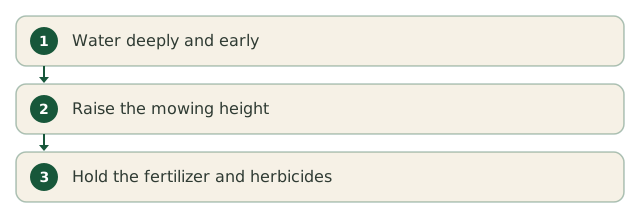
Water deeply and early
Water deeply and infrequently — a good soak rather than a daily sprinkle — in the early morning so the blades dry quickly. Deep watering drives roots down and builds real drought resilience. That's for an established lawn: newly seeded or sodded areas need lighter, more frequent watering until they root.
- Step 2
Raise the mowing height
Mow toward the top of your grass's range and keep the blade sharp. Taller blades shade the soil and can help keep crowns cooler and hold moisture — support for watering, not a replacement for it. Never scalp a stressed lawn.
Remove no more than a third of the blade in one mow, and don't mow a wilted lawn.
- Step 3
Hold the fertilizer and herbicides
Don't feed or spray a heat- or drought-stressed lawn. Most programs feed cool-season grass in fall, and weed killers can injure stressed turf. Let it recover before you push it.
Always read and follow the product label — it is the legal authority on rates, timing, and safety. These windows are regional estimates, not a prescription; defer to the label and your local extension office.
How long should Kentucky bluegrass actually be watered?
Enter your sprinkler type and ZIP in the free watering calculator for minutes per session and days per week, tuned to Kentucky bluegrass in your climate — no signup required.
Open the watering calculatorHow Kentucky bluegrass recovers
Kentucky bluegrass spreads and self-repairs, so once the cause is handled, small thinned or damaged areas usually fill back in on their own with steady watering and time — you rarely need to reseed. One thing working in Kentucky bluegrass's favor: self-repairs via rhizomes — fills in bare spots. Drought-stressed grass that's still alive needs no repair — once the heat breaks or the lawn gets a deep soak, it typically greens back up within a week or two, slower after a long drought; grass a severe drought actually killed needs the same repair as any other dead spot.
Safety first on Kentucky bluegrass
Even with bluegrass's higher nitrogen needs, plan each feeding at about 1 lb per 1,000 sq ft or less (a planning default) — spread the annual budget across several applications rather than front-loading it in spring.
Don't feed or spray a lawn that's already stressed by heat or drought — fertilizer and herbicides can injure turf that's just trying to survive. And more generally, Kentucky bluegrass has this going for it: excellent cold tolerance and winter color. Always read and follow the product label — it is the legal authority on rates, timing, and safety. These windows are regional estimates, not a prescription; defer to the label and your local extension office.
Preventing it next season
Build deep roots with deep, infrequent watering and tall mowing all season, and let cool-season grass go naturally semi-dormant in peak heat rather than forcing growth — it bounces back when the weather breaks.
