
Common in summer
Lawn Heat & Drought Stress: What to Do
When a lawn browns fairly evenly in hot, dry weather — worst in the sun, with footprints that linger — it's often drought stress, and grass that's still alive can recover once water reaches the roots or the heat breaks. The lawn is protecting itself; your job is to help it ride out the heat, not to push it.
How to tell
- Even browning across sunny areas, rather than distinct patches.
- Footprints stay pressed into the grass instead of springing back.
- A blue-gray cast and folded or rolled blades before the brown sets in.
- Stressed grass starts to perk up once water reaches the roots or a cool, wet spell arrives; dormant grass can take a week or two or longer to re-green.
What to do
- Step 1
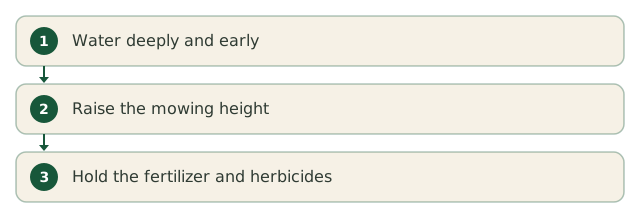
Water deeply and early
Water deeply and infrequently — a good soak rather than a daily sprinkle — in the early morning so the blades dry quickly. Deep watering drives roots down and builds real drought resilience. That's for an established lawn: newly seeded or sodded areas need lighter, more frequent watering until they root.
- Step 2
Raise the mowing height
Mow toward the top of your grass's range and keep the blade sharp. Taller blades shade the soil and can help keep crowns cooler and hold moisture — support for watering, not a replacement for it. Never scalp a stressed lawn.
Remove no more than a third of the blade in one mow, and don't mow a wilted lawn.
- Step 3
Hold the fertilizer and herbicides
Don't feed or spray a heat- or drought-stressed lawn. Most programs feed cool-season grass in fall, and weed killers can injure stressed turf. Let it recover before you push it.
Always read and follow the product label — it is the legal authority on rates, timing, and safety. These windows are regional estimates, not a prescription; defer to the label and your local extension office.
How long should you actually water?
Enter your sprinkler type and ZIP in the free watering calculator for minutes per session and days per week, tuned to your grass and your local climate — no signup required.
Open the watering calculatorGet the next seasonal job sent to you
We'll email you about three weeks before this ZIP's normal first freeze — while irrigation contractors still have slots, and before the backflow preventer is the part that freezes.
The blow-out reminder counts back from your metro's NOAA 1991–2020 median first freeze, not this year's forecast — a normal year, give or take a couple of weeks. Add your address and the reminder follows the live forecast for your own yard, with the checklist built around the zones and shut-offs you've mapped.
Preventing it next season
Build deep roots with deep, infrequent watering and tall mowing all season, and let cool-season grass go naturally semi-dormant in peak heat rather than forcing growth — it bounces back when the weather breaks.
The habit that makes it worse
- The belief
- “A little water every day is the kindest thing for a lawn in dry weather.”
- What’s actually happening
- Lawn roots grow where the water is. A short daily sprinkle wets only the top of the soil, so an established lawn watered that way keeps its roots near the surface — the layer that dries out first on a hot afternoon.
- What it leads to
- The surface looks dry again by the next day, so the sprinkler goes back on, and the lawn grows more dependent on it rather than less. Soil that stays damp at the surface can also encourage fungal disease and gives weed seed a place to sprout.
- What to understand instead
- Water an established lawn less often and more deeply, so the water soaks down through the root zone, then let the surface dry before the next session. The roots follow that water down, which lets the lawn go longer between waterings. How much and how often depends on your grass, soil and weather. New lawns need establishment watering, whether started from seed, sod or plugs; their water amounts and depths differ. For seed, keep the seedbed moist, not saturated. Light watering is usually needed daily, often two or three or more times in drying weather; actual rain may reduce or replace watering. Taper as seedlings emerge across the area, grow and root, protecting slower species in a mix.
What people ask about it
- Is a brown, heat-stressed lawn dead?
- A brown, heat-stressed lawn is often not dead. Lawns that brown in summer heat are often dormant or stressed rather than dead, and living, drought-stressed grass can recover with water or cooler weather. Do the tug test — firm, white crowns mean it's alive — before assuming the worst.
- How much should I water a drought-stressed lawn?
- Water a drought-stressed lawn deeply and infrequently rather than a little every day, early in the morning. The exact amount depends on your grass, soil, and weather — which is what YardLedger's smart watering works out for you.
Heat & drought stress by grass type
The signs of heat and drought stress and the fix shift with your grass — its season, whether it self-repairs, and what it's sensitive to. Pick your grass for guidance tuned to it:
Where this guidance comes from
The university extension and public-agency publications listed here back specific statements on this page. Each publication says which statement it backs, so you can check the statement rather than take it on trust. Where a product label or your local extension office disagrees with anything here, follow the label or the extension office.
- Extension Gardener Handbook, Chapter 9: Lawns
NC State Extension
A blue-gray cast, lingering footprints and folded or curled blades are the signs of drought stress this page lists, and the cue to water.
- Managing Lawns During Drought
University of Illinois Extension
Deep, infrequent watering rather than frequent light sprinkling is the approach this page recommends for a drought-stressed lawn.
- Conserving water on drought-affected lawns
University of Minnesota Extension
Hold fertilizer until moisture returns and the grass is actively growing, as this page advises for a heat- or drought-stressed lawn.
- Home Lawn Watering Guide (G6720)
University of Missouri Extension
Mowing taller supports deeper roots and less wilting, the reason this page says to raise the mowing height in heat and drought.
