
Cool-season lawns
Dormant Seeding: Sowing a Lawn in Late Fall and Winter
Dormant seeding means sowing seed once the soil is too cold for it to germinate, so it waits through winter and sprouts as the ground warms in spring. It is the fallback when you have missed the fall overseeding window: get the seed onto bare soil, sow a little heavier than in fall, and let freeze-thaw cycles work it in.
Dormant seeding is sowing grass seed deliberately late — after the soil has gone cold enough that the seed will not germinate at all — so it sits through winter and sprouts on its own as the ground warms in spring. It is the standard answer for anyone who missed the fall overseeding window, and winter freeze-thaw cycles do the seed-to-soil work that raking normally does. It is genuinely useful and genuinely less reliable than seeding on time.
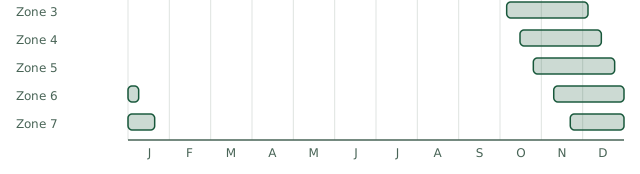
Sow in this window, by zone
The windows below for dormant seeding are approximate, counted from each zone’s typical first fall freeze rather than the calendar — the same week of work falls more than a month apart across the country.
| USDA zone | Sow in this window | Average first freeze |
|---|---|---|
| Zone 3 | October 6 – December 4 | September 15 |
| Zone 4 | October 16 – December 14 | September 25 |
| Zone 5 | October 26 – December 24 | October 5 |
| Zone 6 | November 10 – January 8 | October 20 |
| Zone 7 | November 22 – January 20 | November 1 |
The dates in this table are zone-level approximations from long-term freeze normals. A hardiness zone measures winter cold rather than frost dates, so check your own local first-frost date — and where a job is driven by soil temperature, let that have the final say.
Look up the freeze these windows hang off
The table above is a zone average. Enter your ZIP for the NOAA freeze normals of the station we match to it — the date every window on this page hangs off — free, no signup required.
Free · no signup · NOAA 1991–2020 normals
Rather get one reminder when it’s time?
We'll email you about three weeks before this ZIP's normal first freeze — while irrigation contractors still have slots, and before the backflow preventer is the part that freezes.
The blow-out reminder counts back from your metro's NOAA 1991–2020 median first freeze, not this year's forecast — a normal year, give or take a couple of weeks. Add your address and the reminder follows the live forecast for your own yard, with the checklist built around the zones and shut-offs you've mapped.
The job, in order
- Step 1
Wait until the soil is properly cold
The entire method depends on the seed NOT germinating. Wait until soil temperature is consistently below about 40°F and staying there — usually a few weeks after your first frost. Seed that sprouts in a warm spell and then meets a hard freeze is dead seed.
- Step 2
Get seed to bare soil, then let winter do the rest
Seed still has to reach actual soil, so rake off leaves and open up thin areas first. After that you do not rake it in the way you would in fall — the freeze-thaw cycles through winter heave the surface repeatedly and work the seed down for you.
- Step 3
Seed a bit heavier than you would in fall
Overwinter losses are real: some seed washes away, some gets eaten, some simply fails. Going somewhat above the normal overseeding rate is the accepted compensation — but not wildly above, since whatever does come up still competes with itself.
Follow the bag — the seed label is the authority on coverage rates.
- Step 4
Check spring weed-control compatibility
Dormant seed germinates in spring, which is exactly when you would otherwise be putting down a crabgrass pre-emergent. Many products can injure the new grass, so check the exact label for your species, mixture, rate and seedling stage. If no permitted treatment fits, manage crabgrass after it appears, with any herbicide meeting its new-turf directions.
Only use a pre-emergent over dormant seeding if its label allows your species, mixture, rate and seedling stage. Always read and follow the product label — it is the legal authority on rates, timing, and safety. These windows are regional estimates, not a prescription; defer to the label and your local extension office.
Before you start: the usual questions
- When is it too late to overseed normally?
- Normal overseeding is too late once you are inside about six weeks of your first frost: seedlings no longer have enough mild weather to root before the ground goes cold — they germinate and then die over winter. That is the point at which waiting for the dormant-seeding window becomes the better plan than seeding anyway.
- Does dormant seeding actually work?
- Dormant seeding often works, but less reliably than seeding on time — expect a lower strike rate and a patchier result. Dormant seeding is a good recovery option and a poor first choice. If you have the option of waiting for next fall's proper window instead, take it.
- Can I dormant seed on top of snow?
- Dormant seeding onto a light dusting of snow is fine, and the snow even helps you see your coverage, but deep snow is not — the seed sits on top and runs off with the melt instead of reaching soil. You want frozen or cold bare ground.
- What can I use for crabgrass if I dormant seeded?
- Skip ordinary spring preventers on dormant-seeded areas unless the exact label specifically permits your grass species, seed mixture, rate and stage of establishment. Otherwise manage crabgrass after it appears, with any herbicide also meeting its label requirements for newly seeded turf. Most conventional pre-emergents can injure seedlings or prevent establishment. Before seeding treated ground, follow the exact product's reseeding interval for the rate used; waits are often months, not weeks. Before treating newly seeded grass, follow its separate waiting, mowing and establishment requirements. Use a product at seeding only when its label allows your grass species, seed mixture, rate and timing. For crabgrass prevention while seeding cool-season grass, mesotrione products with new-seeding directions are an option only for the existing turf and seed mixture that product lists. Species and timing differ by product, especially for fine fescue; avoid over-application, particularly with perennial ryegrass.
Where this guidance comes from
The university extension and public-agency publications listed here back specific statements on this page. Each publication says which statement it backs, so you can check the statement rather than take it on trust. Where a product label or your local extension office disagrees with anything here, follow the label or the extension office.
- Dormant seeding to establish or improve your lawn
University of Minnesota Extension
Dormant seed goes down once soil is below 40°F; winter freeze-thaw cycles work it into the soil, and most spring crabgrass pre-emergents cannot be used on a dormant-seeded area because they affect the new grass.
- Dormant Lawn Seeding
K-State Research and Extension, Johnson County
Dormant seeding means sowing once temperatures are consistently below 40°F, too cold for seed to germinate, and it is less reliable than seeding on time because seed sits exposed to weather and wildlife all winter.
- Seeding a New Lawn
Iowa State University Extension and Outreach
Sow dormant seed after the grass has stopped growing, once soil is 40°F or lower, and do not use a crabgrass preventer on it unless the label covers new seedlings.
