
Every lawn
Fall Pre-Emergent: When to Apply — and When to Skip It
Apply a fall pre-emergent roughly three to nine weeks before your first frost, so the barrier is down and watered in before soil cools through about 70°F and Poa annua starts germinating. Skip it on any ground you plan to seed this fall unless the product's label permits use at seeding for your grass, seed and rate.
A fall pre-emergent targets winter annuals — Poa annua above all — that germinate as soil cools and then take over a thin or dormant lawn through winter. It works on exactly the same principle as the spring crabgrass application, just aimed at the other end of the year. It also needs to fit your seeding plans: many pre-emergents can injure seedlings or prevent new grass from establishing. Before seeding treated ground, follow the exact product's reseeding interval for the rate used. Before treating new turf, follow its separate waiting, mowing and establishment requirements. At-seeding use needs label permission for your grass species, seed mixture, rate and timing.
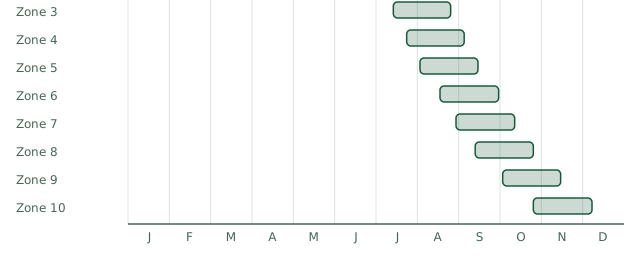
Apply in this window, by zone
The windows below for fall pre-emergent are approximate, counted from each zone’s typical first fall freeze rather than the calendar — the same week of work falls more than a month apart across the country.
| USDA zone | Apply in this window | Average first freeze |
|---|---|---|
| Zone 3 | July 14 – August 25 | September 15 |
| Zone 4 | July 24 – September 4 | September 25 |
| Zone 5 | August 3 – September 14 | October 5 |
| Zone 6 | August 18 – September 29 | October 20 |
| Zone 7 | August 30 – October 11 | November 1 |
| Zone 8 | September 13 – October 25 | November 15 |
| Zone 9 | October 3 – November 14 | December 5 |
| Zone 10 | October 26 – December 7 | December 28 |
The dates in this table are zone-level approximations from long-term freeze normals. A hardiness zone measures winter cold rather than frost dates, so check your own local first-frost date — and where a job is driven by soil temperature, let that have the final say.
Look up the freeze these windows hang off
The table above is a zone average. Enter your ZIP for the NOAA freeze normals of the station we match to it — the date every window on this page hangs off — free, no signup required.
Free · no signup · NOAA 1991–2020 normals
Rather get one reminder when it’s time?
We'll email you about three weeks before this ZIP's normal first freeze — while irrigation contractors still have slots, and before the backflow preventer is the part that freezes.
The blow-out reminder counts back from your metro's NOAA 1991–2020 median first freeze, not this year's forecast — a normal year, give or take a couple of weeks. Add your address and the reminder follows the live forecast for your own yard, with the checklist built around the zones and shut-offs you've mapped.
The job, in order
- Step 1
Keep pre-emergent off the ground you plan to seed
Most pre-emergents stop grass seed as well as weed seed, so the two jobs need separate ground. Seed the thin spots that need it while there is still time for them to establish, and keep the pre-emergent off that ground unless the label allows use at seeding. Established areas you are not seeding can still be treated. If an area was already treated and you want to seed it, the label's reseeding interval says how long to wait.
- Step 2
Time it to soil temperature, not the calendar
Winter annuals start germinating as soil temperature falls through about 70°F, so the barrier works best when it is down and watered in before then. It will not touch weeds that are already up, but germination is spread over weeks, so an application after the first ones appear can still stop seeds that have not germinated yet. Whether a second application makes sense, and when, depends on the product's label.
- Step 3
Water it in to activate it
A pre-emergent forms a barrier in the top layer of soil, and it needs water to get there. Left dry on the surface it degrades without ever activating. Follow the label's irrigation instruction — usually a modest amount within a few days.
Always read and follow the product label — it is the legal authority on rates, timing, and safety. These windows are regional estimates, not a prescription; defer to the label and your local extension office.
- Step 4
Check for a labeled at-seeding use
Mesotrione products with new-seeding directions can be an option for specified grasses and seed mixtures, at that product's rate and stage. Products differ, especially for fine fescue. This does not replace the usual fall Poa annua program: Tenacity lists pre-emergence suppression only, and Scotts Built For Seeding does not list Poa annua. Seed first and treat later only once the chosen product's new-turf requirements are met, or skip fall prevention on that area.
Use a product around seeding only when its label permits your species, mixture, rate and stage. Always read and follow the product label — it is the legal authority on rates, timing, and safety. These windows are regional estimates, not a prescription; defer to the label and your local extension office.
Before you start: the usual questions
- When should I apply a fall pre-emergent?
- Apply a fall pre-emergent roughly three to nine weeks before your first frost — early enough that the barrier is down and watered in before soil temperature falls through about 70°F, which is when Poa annua and the other winter annuals start to germinate. It will not control weeds that have already emerged, but germination is spread over weeks, so seeds that have not germinated yet can still be stopped.
- Can I apply pre-emergent and overseed in the same fall?
- Pre-emergent and overseeding can share a fall on separate areas of the lawn; on the same ground, generally not, unless the exact label specifically permits that seeding use. Most conventional pre-emergents can injure seedlings or prevent establishment. Before seeding treated ground, follow the exact product's reseeding interval for the rate used; waits are often months, not weeks. Before treating newly seeded grass, follow its separate waiting, mowing and establishment requirements. Use a product at seeding only when its label allows your grass species, seed mixture, rate and timing. For crabgrass prevention while seeding cool-season grass, mesotrione products with new-seeding directions are an option only for the existing turf and seed mixture that product lists. Species and timing differ by product, especially for fine fescue; avoid over-application, particularly with perennial ryegrass.
- How long do I have to wait to seed after a fall pre-emergent?
- Seeding after a fall pre-emergent takes a longer wait than most people expect, and the residual is the point of the product, so the wait is real. Most conventional pre-emergents can injure seedlings or prevent establishment. Before seeding treated ground, follow the exact product's reseeding interval for the rate used; waits are often months, not weeks. Before treating newly seeded grass, follow its separate waiting, mowing and establishment requirements. Use a product at seeding only when its label allows your grass species, seed mixture, rate and timing. For crabgrass prevention while seeding cool-season grass, mesotrione products with new-seeding directions are an option only for the existing turf and seed mixture that product lists. Species and timing differ by product, especially for fine fescue; avoid over-application, particularly with perennial ryegrass.
- Do warm-season lawns need a fall pre-emergent?
- Warm-season lawns benefit most from a fall pre-emergent, in fact — Poa annua stands out badly in a dormant, straw-brown lawn and competes with green-up in spring. The same conflict applies though: if you are overseeding with ryegrass for winter color, check the product label for both the existing turf and new seed; many pre-emergents can injure the seedlings.
Fall pre-emergent timing by metro
When the fall pre-emergent window typically opens, metro by metro — the median date shallow soil cools through ~70°F and winter annuals start germinating, with the observed range beside it. Two metros have no publishable median and say so rather than carrying a date. Where the local autumn seeding window can be derived, the page sets the two against each other — because that decision comes first.
Alabama
Arkansas
Colorado
Connecticut
Delaware
Hawaii
Idaho
Illinois
Indiana
Iowa
Kansas
Kentucky
Louisiana
Maine
Maryland
Massachusetts
Michigan
Minnesota
Mississippi
Missouri
Montana
Nebraska
Nevada
New Hampshire
New Jersey
New Mexico
North Carolina
North Dakota
Oklahoma
Pennsylvania
Rhode Island
South Carolina
South Dakota
Tennessee
Vermont
Virginia
Washington
Washington, D.C.
West Virginia
Wisconsin
Wyoming
Where this guidance comes from
The university extension and public-agency publications listed here back specific statements on this page. Each publication says which statement it backs, so you can check the statement rather than take it on trust. Where a product label or your local extension office disagrees with anything here, follow the label or the extension office.
- ID and Control of Annual Bluegrass and Rough Bluegrass in Lawns (AY-41-W)
Purdue Extension
Poa annua is a winter annual that starts germinating as soil cools below about 70°F, so the fall pre-emergent has to be down before then.
- Annual Bluegrass Control in Residential Turfgrass (B 1394)
University of Georgia Cooperative Extension
A pre-emergent can stop Poa annua seed from germinating but will not eradicate plants already up, which is why its timing matters more than its rate.
- Fall Lawn Care (430-520)
Virginia Cooperative Extension
A fall pre-emergent aimed at Poa annua and other winter annuals will also stop new cool-season grass seed, so keep it off ground you plan to seed.
