
Warm-season grass
Kikuyugrass: Chinch Bugs
Worried about chinch bugs on your Kikuyugrass lawn? Spreading brown in the hottest, driest part of the lawn. This guide takes the general diagnosis and tunes it for Kikuyugrass — the signs to look for, what to do first, and how a warm-season lawn recovers — kept safety-first, with the product label as the final word.
What this means for Kikuyugrass
Kikuyugrass: The fast, tough, aggressive grass of coastal California. As a warm-season grass at its peak in summer, when it browns or thins the cause is usually a specific pest, disease, or drought — not the grass simply giving out. Chinch bugs are sucking insects working the hottest, driest part of the lawn, and damage that keeps spreading even when you're watering enough is a clue — once you've checked the water actually reaches those spots — not proof; confirm the insects at a patch edge before treating. Identifying the actual culprit is the whole game: fix that and a healthy stand normally bounces back. Worth knowing about Kikuyugrass generally: forms a dense, tough turf.
How to tell on a Kikuyugrass lawn
- Yellow-then-brown patches in the hottest, sunniest, driest part of the lawn.
- Damage that keeps expanding even when the water reaches the root zone — a clue rather than proof, since plain drought eases once the soil under it is actually wet.
- Tiny black-and-white insects (and smaller red nymphs) when you part the grass at a patch edge.
- Worst along sidewalks, driveways, and south-facing edges where it's hottest.
What to do
- Step 1
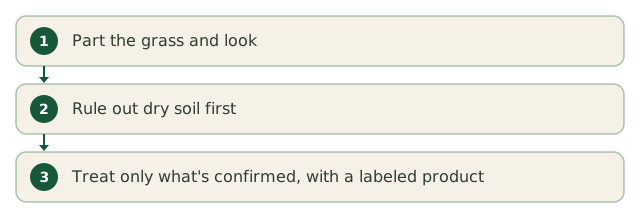
Part the grass and look
At the edge of a spreading patch — where damaged meets healthy — part the grass to the soil and watch for the fast-moving black-and-white adults and reddish nymphs. They're tiny and some beneficial insects look similar, so check several spots with a magnifier and confirm identity — and enough of them to explain the damage — before treating.
- Step 2
Rule out dry soil first
Check the soil under the patch: plain drought starts to green back up once a deep soak actually wets the root zone, while chinch-bug damage can keep spreading anyway. If watering isn't stopping it and you find chinch bugs in numbers at the damaged edge, they're a likely cause.
- Step 3
Treat only what's confirmed, with a labeled product
If you confirm chinch bugs in numbers that explain the damage, choose an insecticide labeled both for chinch bugs and for your grass — some products injure St. Augustine — and treat the affected area. Repair killed spots with plugs or sod once they're gone (St. Augustine is grown vegetatively, not from seed).
Always read and follow the product label — it is the legal authority on rates, timing, and safety. These windows are regional estimates, not a prescription; defer to the label and your local extension office.
Not sure it's Chinch Bugs?
On Kikuyugrass, chinch bugs can look like several other problems. Answer a few quick questions in the free YardLedger diagnosis tool and the tool narrows what your Kikuyugrass lawn is actually showing — and the fix for each — no signup required.
Diagnose my lawnHow Kikuyugrass recovers
Kikuyugrass spreads and self-repairs, so once the cause is handled, small thinned or damaged areas usually fill back in on their own with steady watering and time — you rarely need to reseed. One thing working in Kikuyugrass's favor: fast-growing and very wear-tolerant — recovers quickly from traffic. Chinch-bug damage sits mostly in the crowns they've been feeding on, so a lightly hit patch can recover with water once the insects are gone; a badly hit one needs repair.
Safety first on Kikuyugrass
Kikuyugrass is a US federal noxious weed and is regulated, restricted, or outright prohibited in many states — confirm it is legal in your area (check your state department of agriculture) before planting, and contain it so it doesn't spread to neighbors or wildland. Plan each feeding at about 1 lb of nitrogen per 1,000 sq ft or less (a planning default).
Some insecticides labeled for chinch bugs can injure certain warm-season grasses, so match the product to your grass as well as the pest before you spray. And more generally, Kikuyugrass has this going for it: good heat and drought tolerance in mild coastal climates. Always read and follow the product label — it is the legal authority on rates, timing, and safety. These windows are regional estimates, not a prescription; defer to the label and your local extension office.
Preventing it next season
Mow high, water deeply, and avoid excess nitrogen and thatch, which chinch bugs favor. A healthy, properly watered lawn is far more resistant, and catching them early keeps the damage small.
